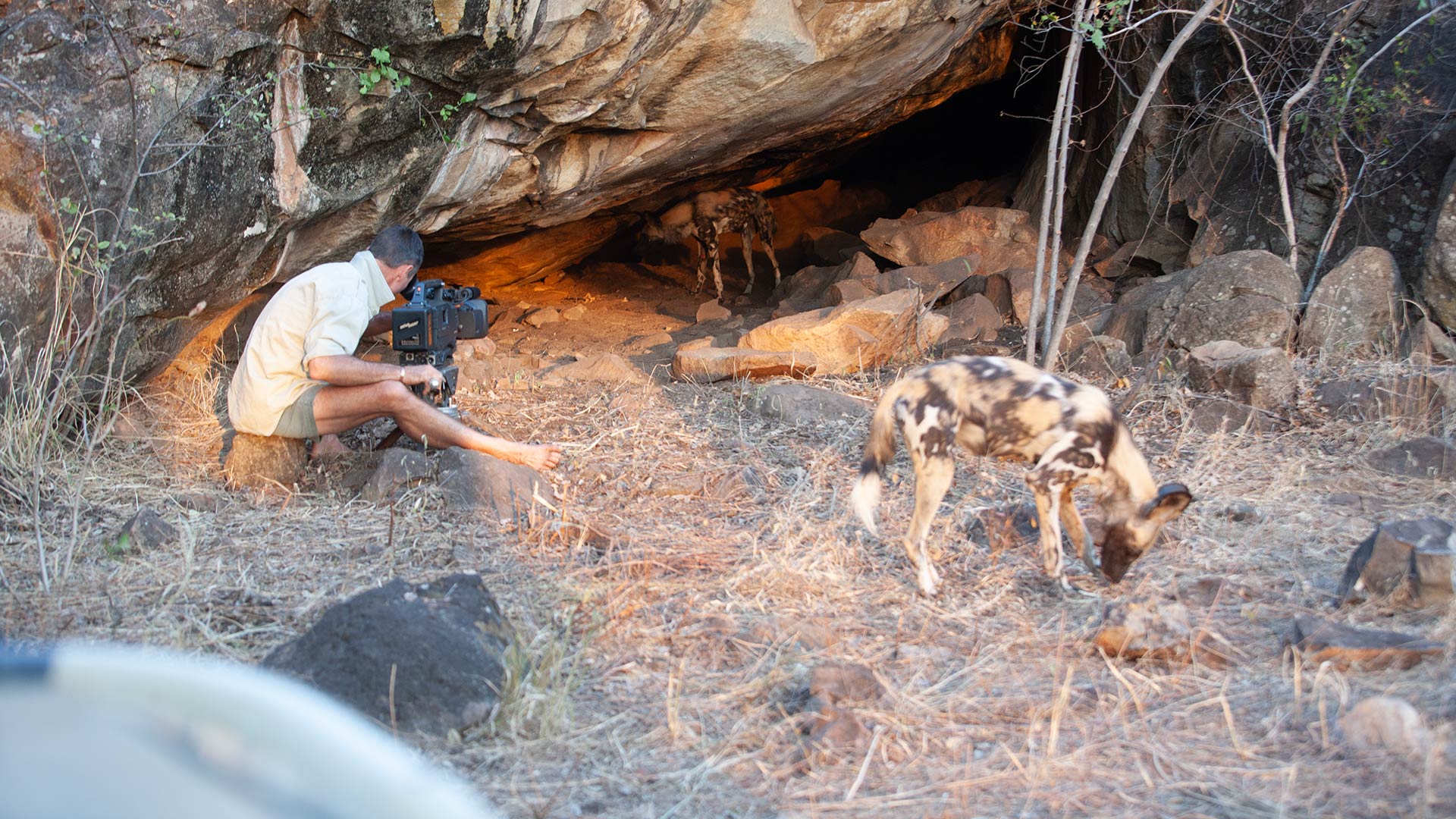
I’ve spent much of my life exploring Africa’s wild places, but few sights captivate me like the ancient Baobabs of the Sango Wildlife Conservancy. I’ve hade one unforgettable encounter that reminded me just how alive and unpredictable, the wild truly is.
Author: Kim Wolhuter
Love this story? Share it and help grow our wild community.
The Giants of Sango
I’ve worked in several areas in southern Africa where Baobab trees occur, but nowhere that I’ve been, has the density of Baobabs we have on the Sango Wildlife Conservancy here in Zimbabwe. These are trees ranging from only a few years old, to some that could be a thousand or more years old. These really are iconic specimens.
Being such huge trees, they have always fascinated me and because of their longevity, I will often just sit there gazing at them wondering what life has been like over the last 1,000 years. The floods and droughts they’ve lived through. All the animals that make their home in these trees. Animals that rely on the shade from their stems that can be 5m in diameter.
Drawn to the Baobab
So, whenever I’m in a new area and I see a Baobab from the road, I will walk there to experience it.
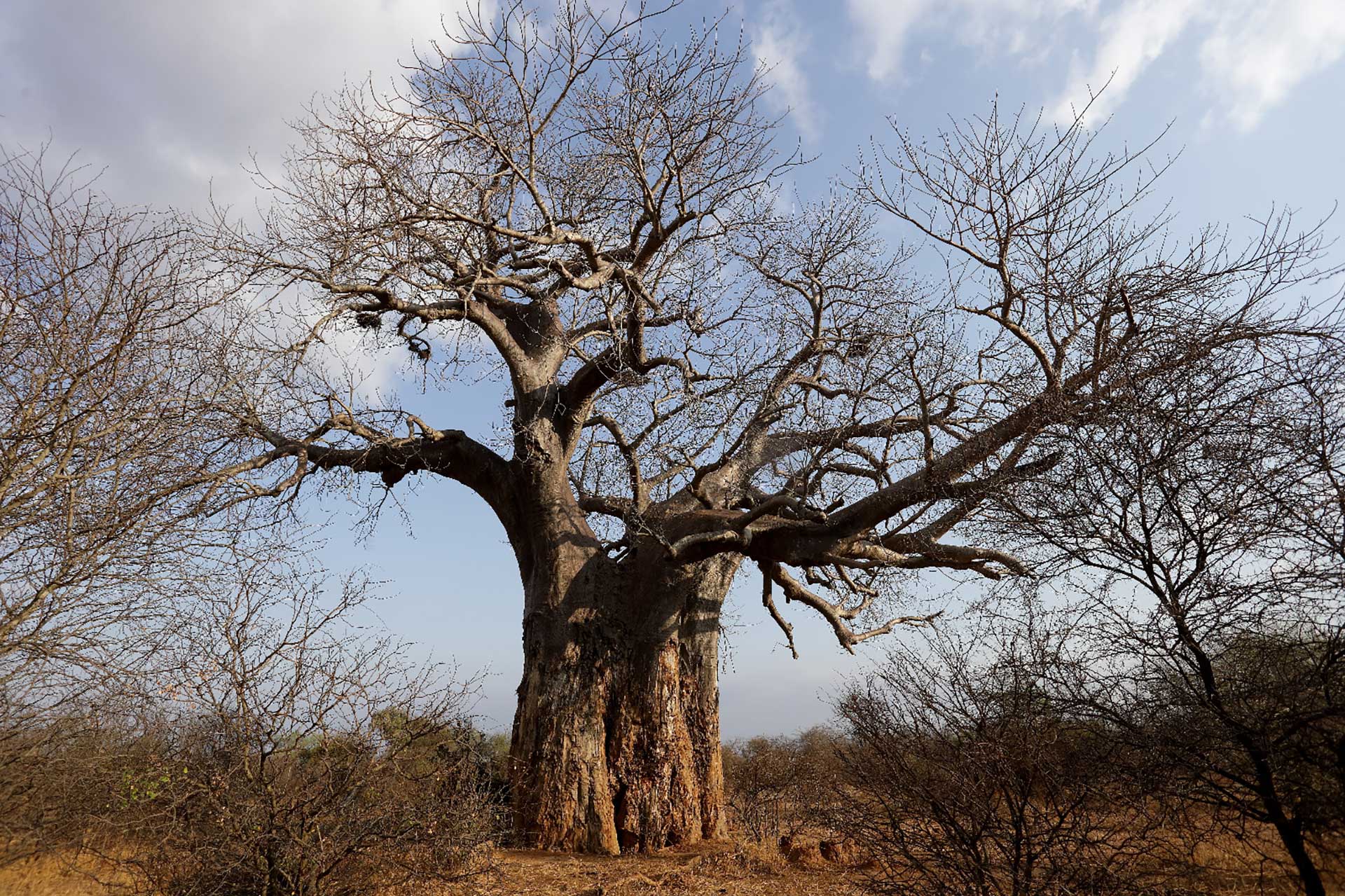
On one such excursion, this large Baobab was about 300m from the road. The Baobab was in a narrow belt of Acacia savannah, the young trees only about 3m high, being totally dwarfed by this Baobab. This belt ran east/west. About 100m north of the Baobab the mopani woodland started. A dense woodland that Joanie battles to navigate. At the moment the woodland is bare of any leaf, the now rusty coloured leaves laying strewn across the landscape.
About 50m south of the Baobab was a small dry stream with vegetation a little more dense than the surrounding savanna.
I left Joanie armed with my camera, always expecting the unexpected.
Barefoot Among Thorns
The ground here was bare, which should have made for easy walking, but my bare feet were having problems with devil thorns. These thorns are not even 5mm in size but are extremely hard. They are the seeds of the Tribulus plant and are surrounded by 4 or 5 short stout thorns that no matter how they fall on the ground there is always one or more thorns waiting to impale you.
One can never really get used to walking this type of terrain barefoot, but often having one imbedded in your foot, instead of constantly having to bend down to take it out, I will scrape my foot across the ground to dislodge them. I was walking across this savanna, watching my every step to also avoid those long white Acacia thorns. The devil thorns are so camouflaged, one just has to take one’s chances with them. And invariably get impaled every few steps.
“Why not wear shoes, you idiot?” Because I like to be a part of the environment and always know what the local animals are experiencing. Especially the soft footed predators, lions, leopards, hyenas…
The Approach
I was walking across this not so comfortable terrain, already a distraction, and was headed for the Baobab. Thankfully not like most animals, Baobabs don’t move 😲
The tree had just come into leaf, ready for the summer ahead. Doves were calling all around and Arrow-marked Babblers were babbling as they moved along the dry stream. I was about 20m from the tree when perched on one of its highest branches a Grey Lourie let rip with its “Go Away!” call and all birds and animals in the area were now aware, danger was approaching.
That danger was me armed with a camera.
Signs of a Predator
From a distance I saw the tree had a hole at the base about 40cm in diameter and another open slit just above it. Baobabs often have a hollow stem, which intrigued me even more as I’ve found impala, warthog and baboon carcasses in them. All probably stashed there by leopards. Also, bees love to live high up in these holes. And no doubt some snakes probably live in there too, although I’ve never seen any.
I approached this hole looking for any sign of any activity. Near the entrance a huge Baobab root was slightly exposed, but the ground was bare here between the root and the tree. So, it wasn’t hard to spot, there on the ground, some fresh intestinal remains from a dead animal. I looked closer and there a clear track. 4 toes and the main pad with 3 lobes. A leopard.
This was not the time to be investigating any closer. These intestines were fresh. Was the leopard inside the tree? I didn’t want to find out right now.
I left the tree and to get away from the devil thorns, I walked in the little stream bed, the soft cool sand between my toes.
I abandoned the mission to check out that tree.
A Return Visit
It was a couple of months later, I was again driving past the tree and decided to check it out again. I wanted to get inside, to see how big it was, and just really get to know the tree.
Walking towards the tree, I was now filming and talking about my previous experience of investigating this tree, in between scraping devil thorns from my feet. I got up to the tree, still filming, and talking while scanning the ground around. The section between the exposed root and the tree was bare and looked windswept. There was nothing around. Still filming, now pushing the camera right up the hole, the whole frame suddenly filled with spots. There fast asleep in the Baobab was a LEOPARD.
Face to Face
I went quiet. I had to be sure not to awaken the leopard. Could I get away before it woke up? Or was it already awake and now watching me? I backed off slowly.
Trying to be quiet while negotiating devil thorns is tricky in the good times, but with the threat of waking a sleeping leopard, that was forgotten about.
I backed off, back into the streambed and back to the safety of Joanie.
The Growl
Now in my safe place, it all seemed too easy, and I started doubting myself that there actually was a leopard in there. I decided to go back, but this time I took Joanie with me. She of course doesn’t know how to move in stealth mode. It wasn’t just a matter of driving straight in there. There were small Acacia’s blocking my way, so with lots of reversing and forwarding. I eventually got to the exposed root.
Just as I did, there was a deep growl from the depths of the Baobab. The head of the leopard appeared in the top hole, then disappeared.
A couple of seconds later the leopard came barrelling out the hole growling madly. I thought she was coming straight for me, but realised she had to get out the hole first, then turned and took off disappearing behind the Baobab and into the mopani.
Reflection
My nerves eventually settled and thinking back how dangerous that encounter could have been had she woken up when I had walked up to the hole.
Yet again, Joanie saved the day.
The leopard must have been in a deep sleep feeling safe in the depths of the Baobab, so hadn’t heard me talking. She didn’t even wake with the alarm call from the Lourie.
So what does this story tell me… Don’t ever rely on my tracking skills. She would have left some evidence of being there, but I didn’t pick it up.
Of course, curiosity got the better of me and many months later, being extra vigilant, I was finally able to see inside the Baobab.