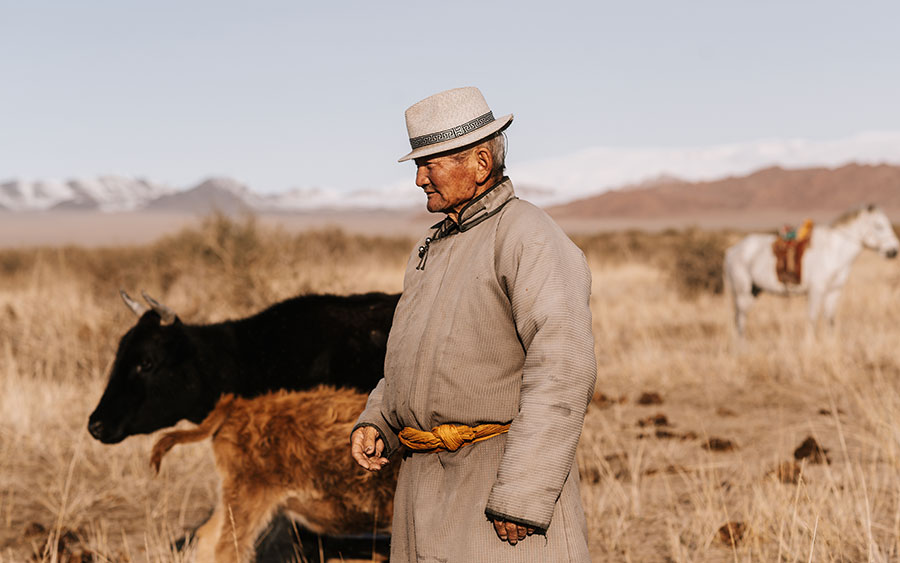
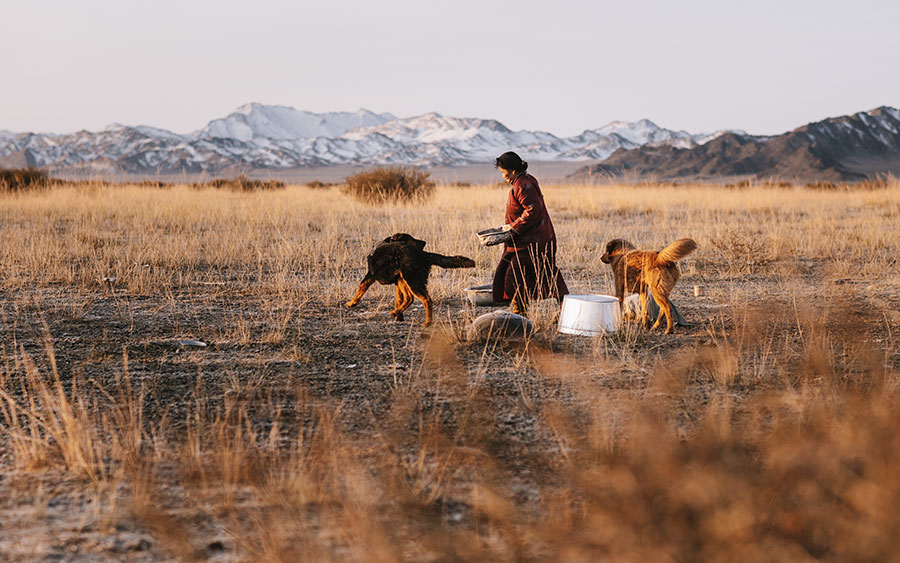
In the endless openness of the Mongolian steppe, I lived with a family of nomads and eagle hunters. Their lives may seem simple from the outside, but in that simplicity lies a kind of freedom that’s hard to find elsewhere. Between the wind, the silence, and the rhythm of the animals, I began to understand what it means to truly live with nature.
Author: Melanie Többe
Love this story? Share it and help grow our wild community.
The Rhythm of the Land
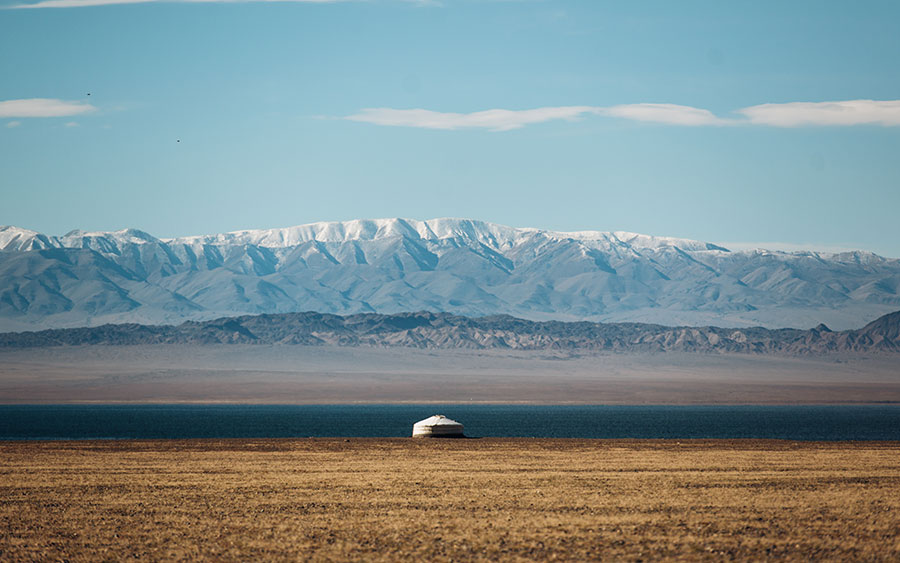
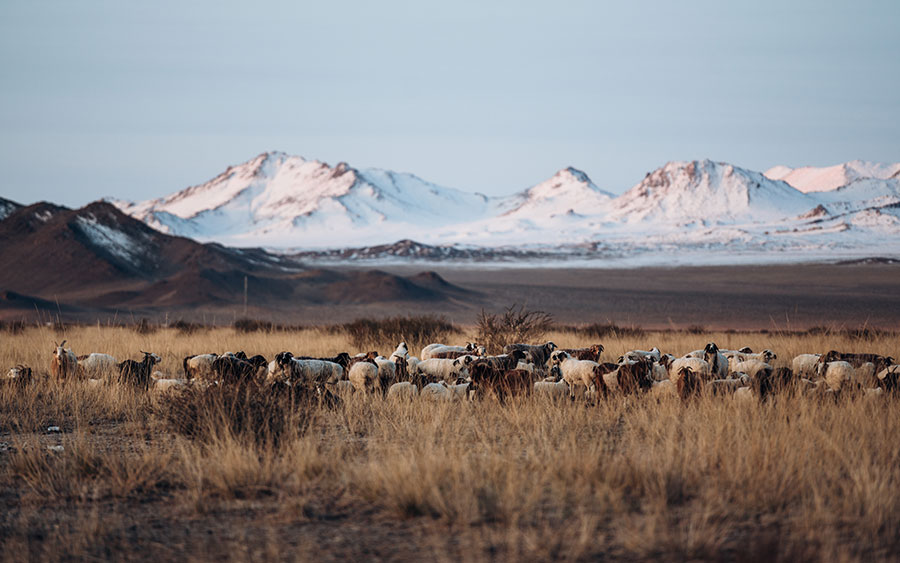
There’s something almost infinite about the Mongolian landscape. The horizon stretches beyond imagination. Grasslands melting into distant mountains, a sky so wide it feels like you could fall into it. When I first arrived, I felt small, swallowed by the space and the silence. But the family I stayed with didn’t see emptiness. For them, the steppe is full of life, of stories, of movement and purpose. The pace of life here isn’t dictated by clocks, but by the wind, the weather, and the animals’ needs. It’s a rhythm that feels ancient, and yet it still works unchanged for generations.
At first glance, nomadic life seems harsh. Temperatures drop far below zero, the wind never really stops, and luxuries like hot showers or electricity feel like a distant dream. But I quickly realized how full their lives actually are. There’s always laughter in the yurt. Tea is constantly brewing. The children ride horses before
they can properly walk, and the bond between the people and their animals is something words can barely describe. They may live with little, but they lack nothing essential. Their wealth is measured in freedom, in open horizons, shared meals, and quiet evenings spent under a sky bursting with stars.


Life with a Nomadic Family
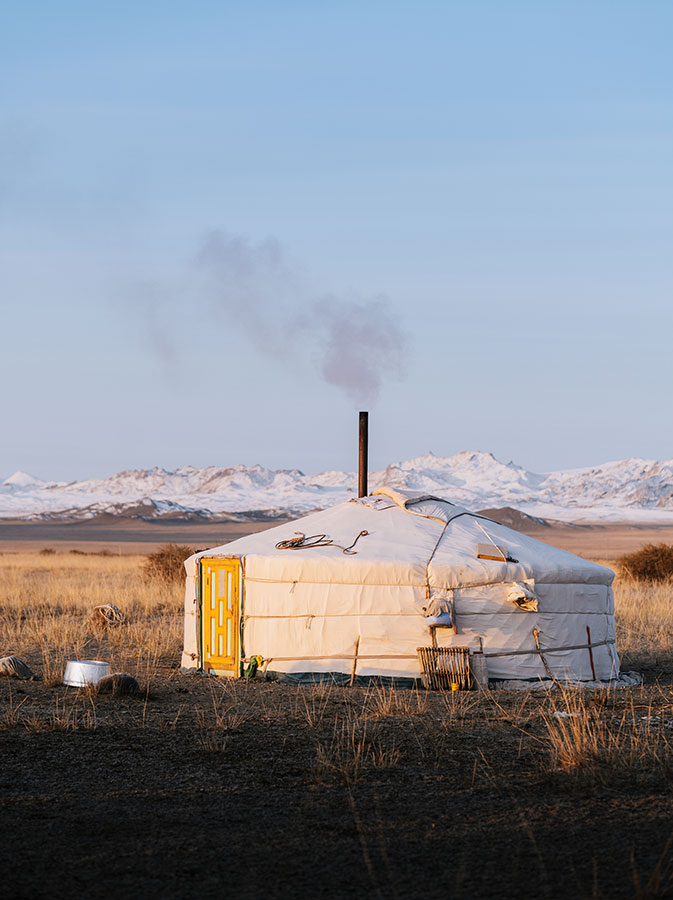
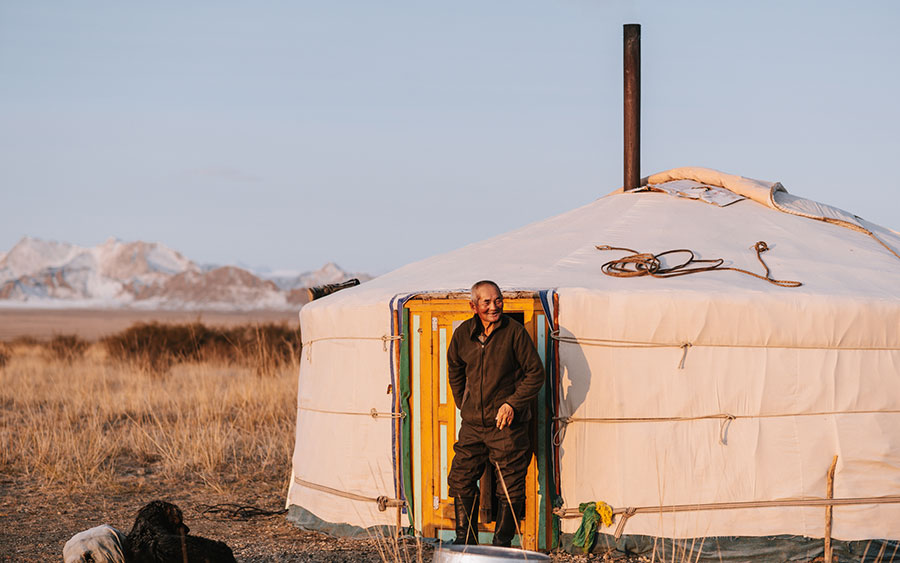
The family I stayed with lived in a small cluster of gers. Traditional round tents made of felt and wood, perfectly designed to resist the wind and cold. They moved several times a year, following the seasons and the needs of their herds. In summer, they lived near rivers; in winter, closer to the mountains for better shelter.
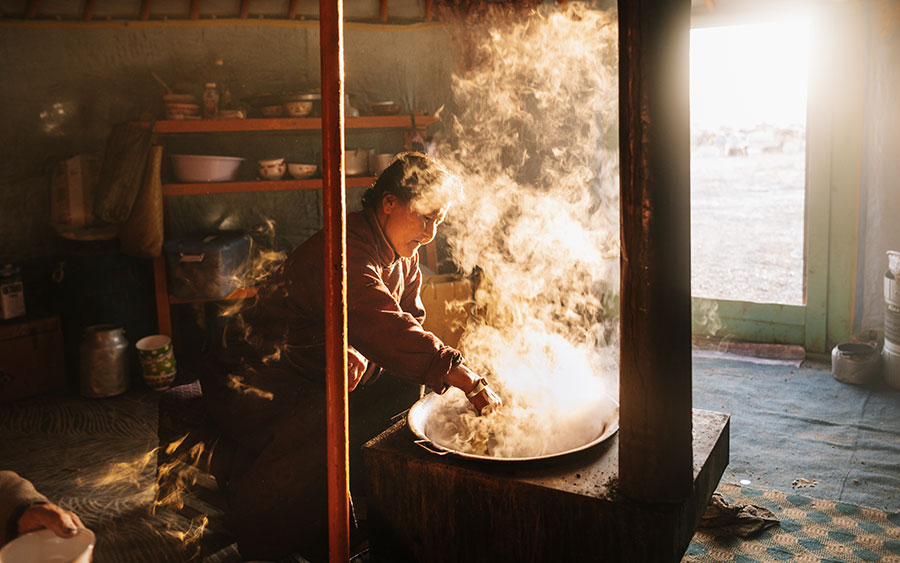
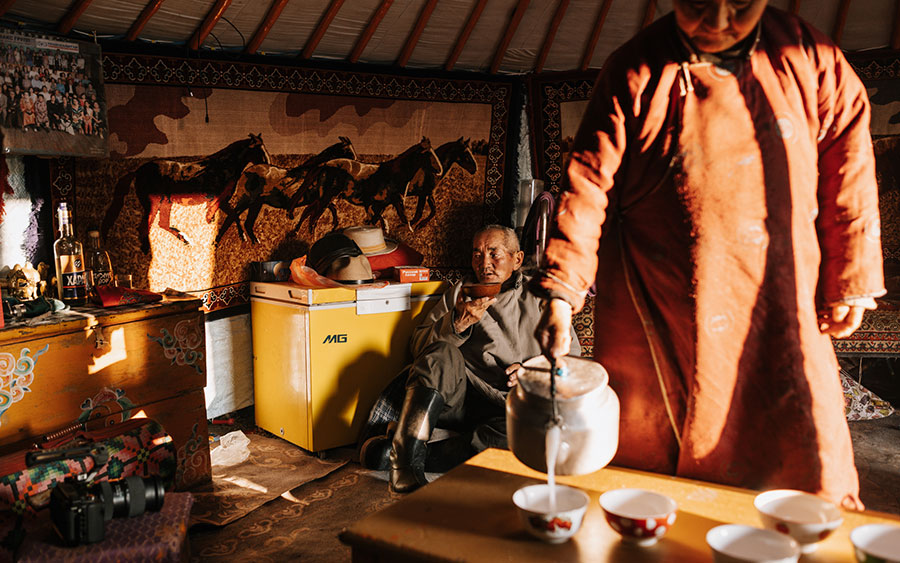
Inside the ger, life feels warm and close. A small iron stove sits at the center and some small beds around the it at the wall of the ger. What struck me most was their generosity. Even with limited resources, they constantly offered milktea and pastery. Their hospitality is instinctive, a reflection of the land itself: open, vast, and giving.
As I photographed their daily life like milking goats at sunrise, mending saddles and children chasing sheep in the dust, I realized that this way of living, often seen as primitive by outsiders, is built on a deep understanding of balance. They live with the land, not apart from it. Nothing is wasted, and everything has purpose. It’s a lifestyle that feels fragile in the modern world, yet incredibly strong in its wisdom.
Days with the Eagle Hunters
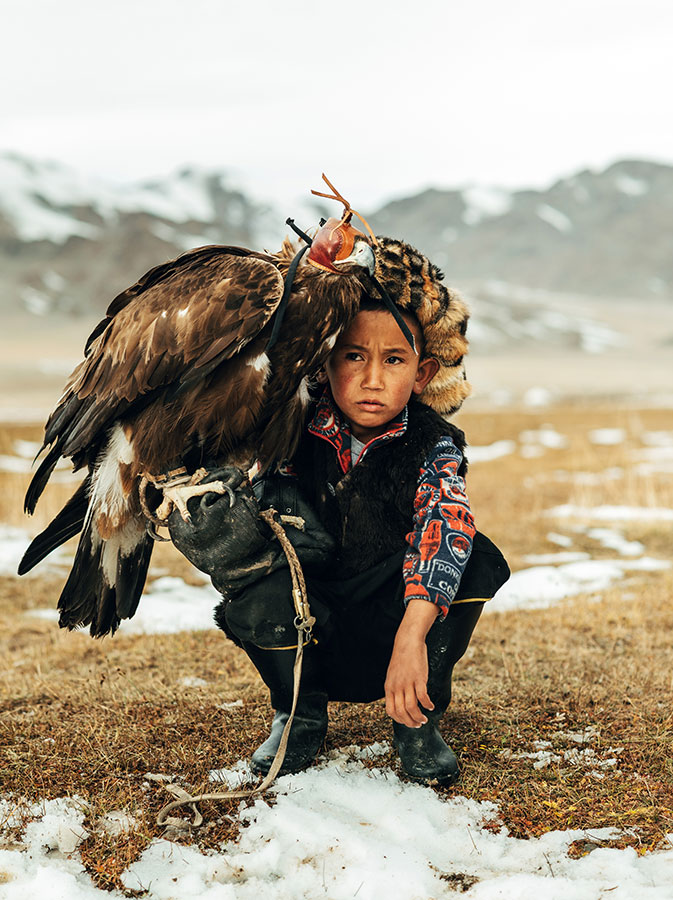
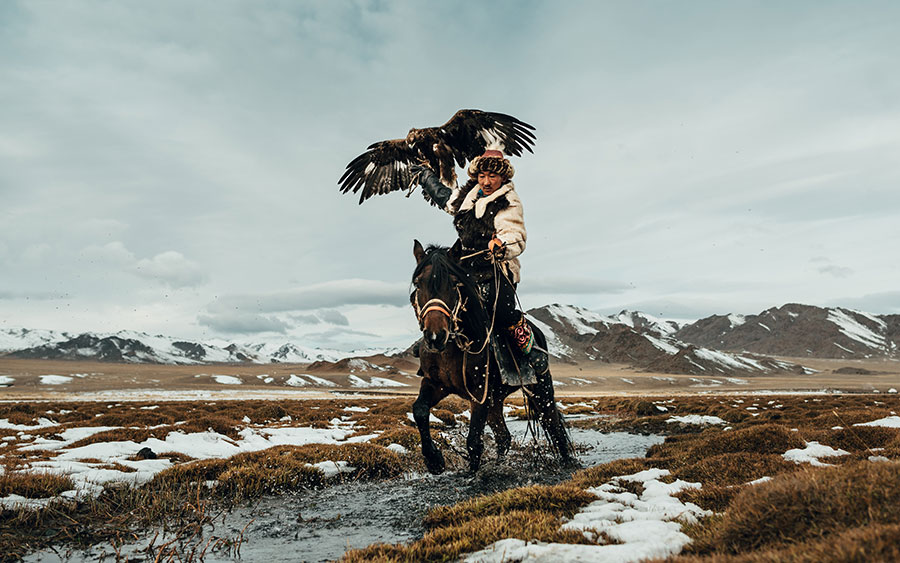
Later, I traveled further west to stay with a mongolian family of eagle hunters near the Altai Mountains. One of the few remaining places where the ancient art of falconry is still practiced. Every morning, they rode out before sunrise, wrapped in layers of fur, their horses moving silently through the frost. The air was thin and sharp. On the hunter’s arm sat his golden eagle. Watching them together felt like witnessing an unspoken dialogue between two beings who
completely trust one another.
I learned that training a hunting eagle takes years. The birds are raised from a young age, but they’re never truly tamed. They remain wild, and that’s what makes the bond so unique. After several hunting seasons, the eagles are released back into the mountains, free again. There’s no ownership, only respect.
Photographing those moments was both a privilege and a challenge. The light changes fast in the mountains, and the cold numbs your fingers almost instantly. But the rewards are beyond words: the moment when the eagle launches into flight, the sound of its wings slicing through silence, the pride in the hunter’s eyes. It’s a living link between people, animals, and the land.

Lessons from the Steppe
As a photographer, I came to Mongolia searching for stories and light. I left with something much deepe. A reminder of balance.
In the cities, freedom often means having options, owning more, going faster. Here, it means the opposite. It’s about trusting the land, embracing uncertainty, and letting go of control. The nomads move when the grass runs out, when the weather changes, or simply when it feels right. There’s no resistance, just flow. Watching them, I realized that real connection with nature, with others, with yourself begins when you stop trying to own it.
Photography Notes
Camera: Nikon Z6 / 70-200mm f. 2,8 / 85mm f.1,8 / 28mm f.1,8 / 50mm f.1,8 / DJI Mavic Pro 2
I tried to capture the stillness of wide landscapes alongside the intimacy of daily life: hands tending a fire, the warmth of an eagle on a hunter’s arm, the vastness between two distant riders. Every image is a small piece of a life that exists almost untouched by time.
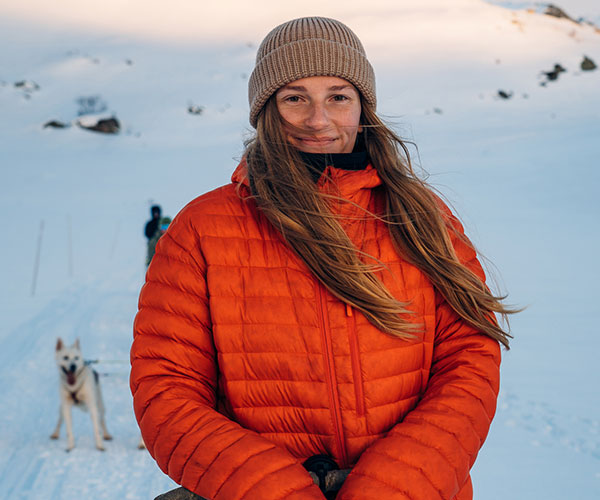
Melanie Többe is an Adventure Travel and Outdoor photographer and filmmaker. Her work captures the deep connection between people and nature. The stories that unfold where the two meet. Through her images, she invites others on a journey to the most breathtaking landscapes, into the fascinating worlds of different cultures and to the heart of the stories our planet tells.
For Melanie, nature embodies freedom and aliveness. A feeling she aims to share through her photography. Each image is a reminder of how unique and fragile our world is, and an invitation to step outside, explore, and reconnect. Ultimately, Melanie’s photography is about connection across cultures, landscapes, and hearts inspiring people to embrace new adventures and perspectives.
Follow Melanie