
The story of elephants is not just one of size and strength, but of profound connection. While we often picture the wild as a place where survival depends on individual power, elephants remind us that community is equally vital. Their tightly woven social structures provide not only protection and guidance in daily life but also essential support during the most critical moments of birth. Exploring how these bonds shape survival opens a window into the remarkable intelligence, empathy, and cultural continuity of elephant societies.
Author: Connie Allen Wild
Love this story? Share it and help grow our wild community.
Community as a Cornerstone of Survival
The wild, untamed animal world often conjures images of fierce independence, of survival against all odds, alone. But delve a little deeper, and a different reality becomes clear: for many social mammals, connection and existing in community life isn’t just a comfort; it’s a cornerstone of survival, especially during life’s most vulnerable moments. And few moments are more vulnerable, or more awe-inspiring, than the birth of a new life.
Matrilineal Knowledge in Action
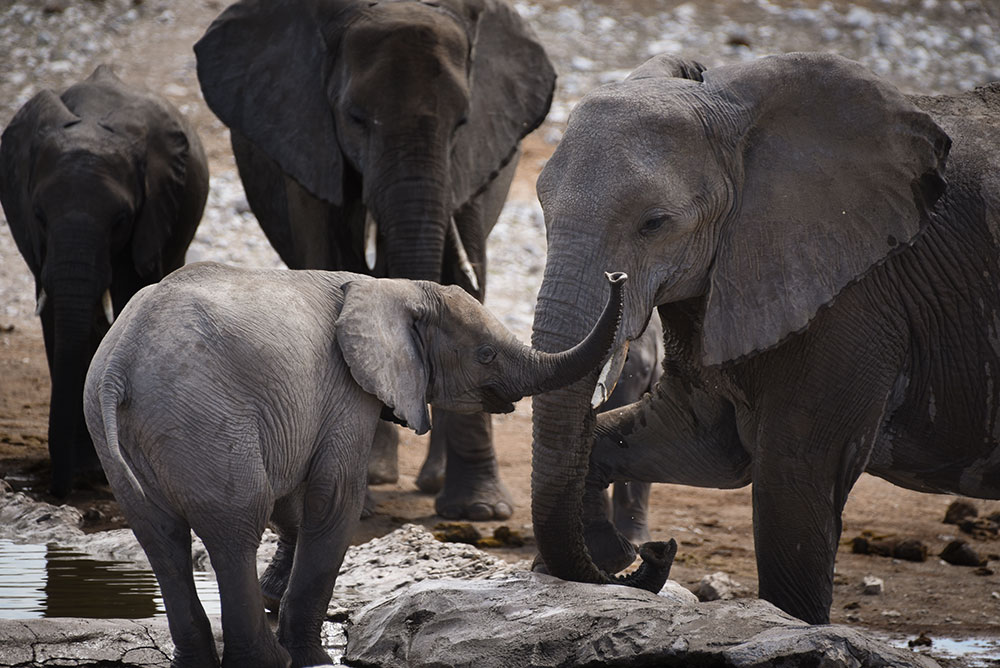
For years, we’ve had anecdotal glimpses into the incredible social dynamics surrounding elephant births. Experienced females, with a wealth of knowledge about the birthing process from witnessing the previous births of perhaps dozens of group mates, as well as from how they were treated during their own labours, have been observed taking a lead role in staying close, even offering comforting touches to the a labouring mother during her contractions. After delivery, group matriarchs (older females that lead groups) have been observed breaking the amniotic sacs of calves on behalf of less experienced mothers, or standing over and protecting the newborn calves of first-time mothers, preventing her from accidentally harming her wobbly newborn in the initial confusion and rush of hormones that can be overwhelming for a first-time mother. Completing this cycle of knowledge, young, inexperienced females are also present to observe birth at close range, learning invaluable lessons for their own future first-births.
Unveiling the Secrets of Elephant Social Birth Support: My Research Journey
Despite these compelling observations, our scientific understanding of elephant social birth support remains surprisingly limited. Rare life events, such as birth, have until now been difficult to analyse quantitatively owing to the challenges that come with systematic analysis of small data sets. As a result, the specifics, such as what behaviours are performed, how frequently, by whom, and what impact they truly have on birth outcomes, are largely unquantified. However, with the rise in remote filming technologies and the increased accessibility of recording equipment, that is changing. There is now an opportunity to quantitatively analyse elephant birth events, and this is precisely where my ongoing research project steps in.
What My Work Explores
My work aims to thoroughly investigate the nature and influence of social support during labour, birth and the early postpartum period in elephants. I am combining meticulous analysis of vast video archives of elephant labor and birth from the wild, captivity, and wildlife sanctuaries worldwide, with comprehensive data on the health and survival outcomes of these individual birth events. My work is driven by a few key questions: Do elephants exhibit unique social behaviours during birth events? Does a greater frequency and range of social support lead to shorter labours and healthier birth and postpartum outcomes for both mother and calf? And what factors, such as age, previous experiences of birth, and social role, influence who provides support, and how does that affect the birth?
Why Does This Matter?
Beyond the sheer fascination of witnessing nature’s incredible bonds, culture and connectivity, this research has profound implications for elephant welfare and conservation. Unfortunately, many elephants under human care face suboptimal reproductive health, with concerning rates of stillbirths, dystocia (difficult birth), and high calf mortality. Unlike humans, medical interventions for difficult elephant births are incredibly risky or impossible, for example elephant anatomy makes a cesarean delivery impossible. Better understanding and facilitating natural social support behaviours of elephants could be a game-changer, improving birth outcomes and addressing these critical challenges. Understanding the importance of giving birth in the herd, and assuring that labouring females are not separated from their group mates during labour and calf delivery, is probably essential for not only assuring that labouring females get the essential birth support that they need to guarantee a healthy, successful labour and birth; but also for assuring that the knowledge of what happens at birth events, and the appropriate behaviour of supporting herd mates is able to be passed on to younger, less experienced members of the herd. And so, the cycle of support giving, so essential to elephant survival, can continue, and cultural knowledge is preserved.
From Rare Observation to Evidence-Based Care
My work taps into previously unanalysed video footage of elephant labour and birth, turning rare observations into concrete scientific evidence. By shining a light on the intricacies of social support during elephant births, I hope to empower those who care for these magnificent creatures with evidence-based insights to enhance husbandry practices and contribute to the long-term sustainability of both African Savanna and Asian elephant populations. Ultimately, it’s about giving these intelligent, deeply social animals the best possible chance at a healthy life, surrounded by the connection and knowledge they so profoundly thrive on.

To explore more of Connie’s work, or to get in touch about this research, visit Connie’s website https://www.allenwild.net
Follow Connie